NutritionFacts.org

Plant-Based Diets for Rheumatoid Arthritis

May 16, 2013 by Michael Greger M.D. in News with 19 Comments


Plant-based diets may help rheumatoid arthritis by decreasing exposure to an inflammatory “Trojan horse” compound found in animal products called Neu5Gc. In How Tumors Use Meat to Grow I talked about the inflammatory role Neu5Gc may play in stimulating breast cancer growth, but what about inflammation in our joints?

For those of you who have been following my work since the beginning, you’ll remember back in 2003 I covered a landmark paper in the Proceedings of the National Academy of Sciences entitled “Human intake and incorporation of an immunogenic nonhuman dietary sialic acid.” They took autopsy samples and discovered proof of Neu5Gc in human tumors. In my video The Inflammatory Meat Molecule Neu5Gc you can see it stained brown in human breast cancer, melanoma, brain tumors, and ovarian cancer.

The presence of Neu5Gc in human tumors mystified researchers, because human beings are genetically unable to produce this substance. But other animals can. Maybe, the researchers proposed, human beings absorbed it from eating these other animals? So they put it to the test.

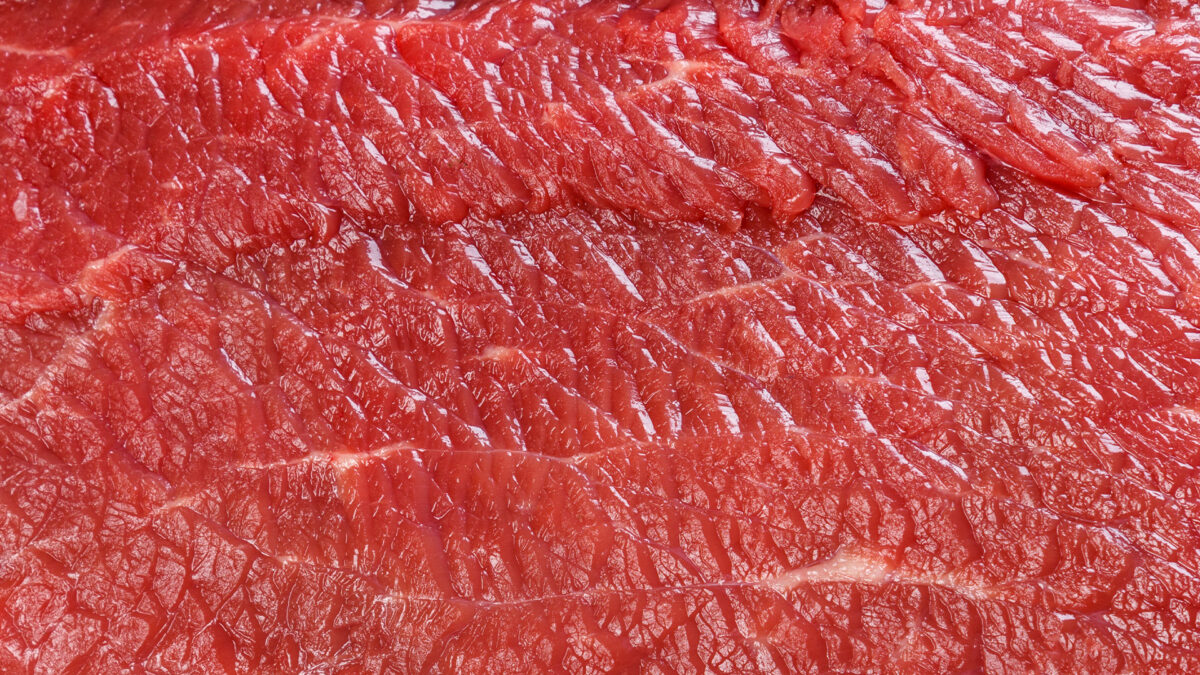
Because Neu5Gc is found in animals and animal products, the researchers had to first eat vegan for a few days to clear their system (including no animal-derived ingredients in foods or drugs or shampoo), and then they basically drank a glass of diluted pig mucous. Within days this invading meat molecule could be found oozing from their bodies, in their saliva, urine—even their hair clippings. They concluded: “Because NeuGc-type compounds are not found in plants, and Neu5Gc is not synthesized by microbes, the dietary source of Neu5Gc must be foods of animal origin.” They proposed that the metabolic incorporation of this molecular “Trojan horse” from animal products may be contributing to the higher rates of cancer and heart disease in those that eat meat and dairy.

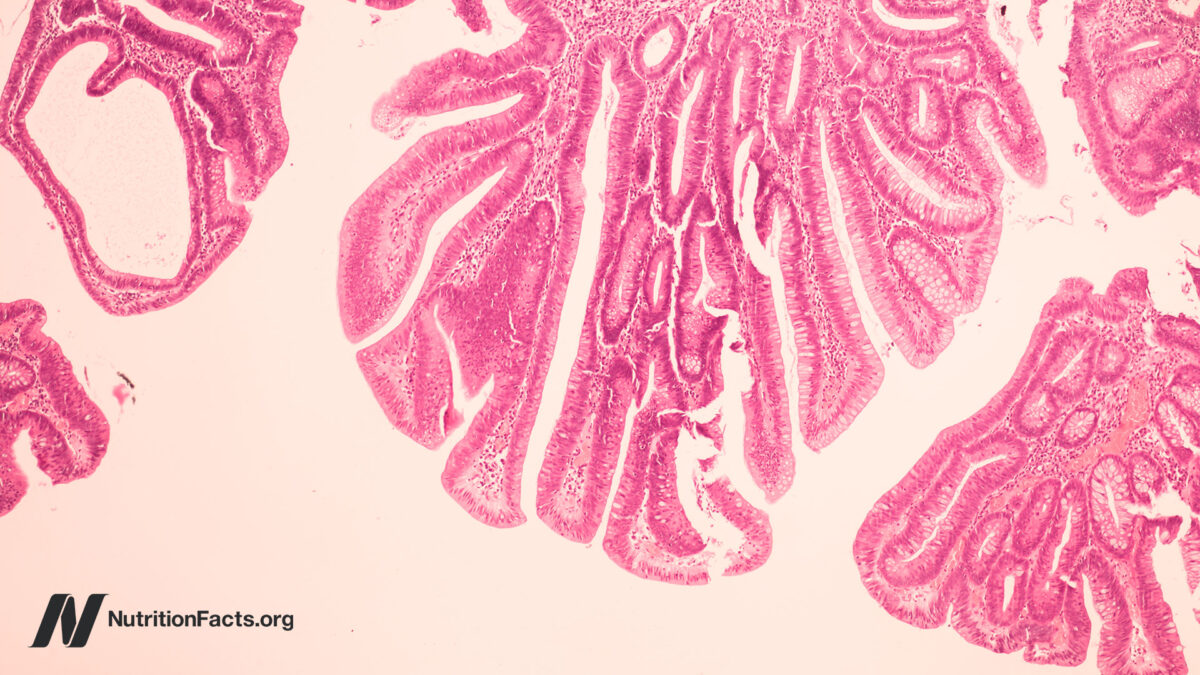
Why heart disease too? If you check out my 3-min video Nonhuman Molecules Lining Our Arteries, you’ll see that this foreign meat molecule tends to accumulate not only in the lining of hollow organs (where carcinomas like breast cancer develop inside your glands), but also in the lining of blood vessels. This may be contributing to the hardening of our arteries, the #1 killer of men and women in the United States.

Inflammation is one of the three steps en route to fatal heart disease. See:

Antioxidants found predominantly in plants may also decrease inflammation within the body. Nuts may be particularly useful in this regard.

The absorption of the inflammatory molecule Neu5Gc from animal foods may also explain why vegetarian diets seem to improve rheumatoid arthritis. Maybe the incorporation of this reactive alien molecule into inflamed tissue such as arthritic joints could be aggravating arthritis. That could explain why rheumatoid arthritis is not present in most other great apes. What we do know is that if you take animal products away, rheumatoid sufferers can feel better within weeks–see Diet & Rheumatoid Arthritis and Preventing Arthritis.

Bacterial endotoxins are another reason animal products may trigger an inflammatory immune reaction. See:

Beyond the putative role of nonhuman Neu5GC as a potential molecular link between diet, autoreactive antibodies, and the progression of human cancer and heart disease, I close out the Neu5Gc story with a 3-min. video entitled Meat May Exceed Daily Allowance of Irony. It turns out that consuming Neu5GC may set children up for life-threatening reactions to E. coli toxins originating in the same animal products. The researchers ask if this is “poetic justice” for meat eaters. Not when it’s a major cause of acute life-threatening kidney failure in children. For more on E. coli, see Fecal Bacteria Survey and Chicken Out of UTIs.

My exploration into Neu5GC spanned a seven video series (starting with Cancer as an Autoimmune Disease). If you’d rather these more extensive probes than my one-off videos, I’ve done similar in-depth series on reversing cancer cell growth, why animal products cause inflammation, changing vitamin D recommendationsarugula athleticism, why nuts don’t appear to cause expected weight gain, as well as the latest dietary guidelines.

-Michael Greger, M.D.

PS: If you haven’t yet, you can subscribe to my videos for free by clicking here and watch my 2012 year-in-review presentation Uprooting the Leading Causes of Death.

Image credit:  Jojo / Wikimedia Commons

How Tumors Use Meat to Grow

May 14, 2013 by Michael Greger M.D. in News with 10 Comments

Certain cancers—like breast cancer—can be thought of in part as an autoimmune disease.

When people get heart or kidney transplants, they must be given immunosuppressive drugs to prevent rejection of the new organ. What do you suppose happens to cancer rates in those individuals who have their immune systems suppressed? Well, for some types of cancer, like skin cancer, the risk goes up. This supports the so-called immune surveillance theory—the idea that our immune system acts as a natural defense system for keeping cancer under control (see a cool video of immune cells taking on a cancer cell here). This could explain why, as we age and our immune function declines, our risk of cancer goes up.

The problem with the immune surveillance concept is that for some cancers, suppressing immune function decreases risk. After a kidney transplant, though your skin cancer risk may go up, your breast cancer and rectal cancer risk goes down. Why would people with depressed immune systems have less cancer? This led to a new theory of cancer I explore in my 4-min. video Cancer as an Autoimmune Disease.

The only reason the immune system is even able to pick out cancerous cells from noncancerous cells is because tumors express foreign looking molecules that stimulate our immune system. Why would tumors do that? Why would cancer cells go out of their way to wave a red flag around saying, “Hey, come get me!”? We think it’s because cancer tends to thrive in a setting of low level inflammation. In the video I show a number of examples of chronic inflammation leading to cancer–ulcerative colitis to colon cancer, chronic pancreatitis to pancreatic cancer, chronic hepatitis to liver cancer, and stomach inflammation to stomach cancer. Oftentimes the body’s inflammatory immune response can further cancer’s agenda.

By inciting an immune response, cancer creates its own inflammation, which may stimulate angiogenesis, the formation of new blood vessels to bring blood to the tumor and help it grow. This may explain the mystery surrounding Kaposi’s sarcoma, a cancer affecting those with AIDS. When you start treating AIDS and the immune system starts to recover you can actually see a flare in the cancer.

So what are the dietary implications of this new autoimmune theory of cancer? See my 3-min. video How Tumors Use Meat to Grow: Xeno-Autoantibodies. In short, there’s a molecule called Neu5Gc found in nonhuman animals but not made by the human species. Cancerous breast tumors appear to incorporate this molecule that women consume in meat and dairy to trick their immune systems into creating the environment of low-grade inflammation that breast cancer thrives in. Our own cancer may use what we feed on to get what it feeds on.

For more on Neu5Gc, one of the most fascinating topics of modern day nutrition, see my 4-min. video The Inflammatory Meat Molecule Neu5Gc.

Why else might those eating plant-based diets have lower risk of all cancers combined? Kathy Freston wrote a good summary. It could be due to diminished exposure to IGF-1heme ironinflammation, virusesantibioticssaturated fatnitrosamines, and arachidonic acid associated with animal product consumption. Or it could be the DNA repair,cellular stress defensesanti-inflammatory properties, soylignansphytonutrients, and fiber associated with healthy plant food consumption. It’s probably both, so it may not be enough to just eat vegan—we need to eat our veggies too.

-Michael Greger, M.D.

PS: If you haven’t yet, you can subscribe to my videos for free by clicking here and watch my 2012 year-in-review presentation Uprooting the Leading Causes of Death.

Image credit: Pulmonary Pathology / Flickr

Page 1 of 6612345...102030...Last »
  • What is the optimal diet for disease prevention?

  • Subscribe to our free newsletter and stay up to date with the latest discoveries in nutrition.
  • This field is for validation purposes and should be left unchanged.