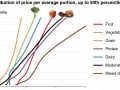
Eating Healthy on a Budget
When measured on a cost-per-serving, cost-per-weight, or cost-per-nutrition basis, fruits and vegetables beat out meat and junk food.
When measured on a cost-per-serving, cost-per-weight, or cost-per-nutrition basis, fruits and vegetables beat out meat and junk food.
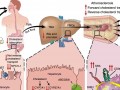
Expanding on the subject of my upcoming appearance on The Dr. Oz Show, a landmark new article in the New England Journal of Medicine shows that choline in eggs, poultry, dairy, and fish produces the same toxic TMAO as carnitine in red meat—which may help explain plant-based protection from heart disease and prostate cancer.

Plant-based diets appear to offer relief from a variety of menstrual symptoms, including cramping, bloating, and breast pain (cyclical mastalgia).

Two theories about the buildup of subcutaneous fat, involving the chemical spermine and the hormone adiponectin, suggest a plant-based diet may help with cellulite.

Hundreds of thousands of Americans are Salmonella-poisoned by poultry every year—yet it remains legal to sell meat proven to be contaminated.

The early onset of puberty in girls associated with animal protein consumption may be due to endocrine-disrupting chemical pollutants in the meat supply.

People eating conventional diets may ingest a trillion microparticles of the food-whitening additive, titanium dioxide, every day. What implication might this have for inflammation in the gut?

Plant-based diets may help protect against oral cancer and periodontal (gum) disease, a leading cause of tooth loss.

The polycyclic aromatic hydrocarbons in the vapors released from cooking meat may be hazardous for fetal development, and increase the risk of cancer.

The boost in detoxifying enzymes triggered by cruciferous vegetable consumption may last for weeks!

Garlic and flavonoid phytonutrients found in fruits, vegetables, nuts, and grains appear to protect against DNA damage induced by mutagenic chemicals found in cooked meat.

Using the cooked meat carcinogen PhIP to turn normal breast cells cancerous, researchers explore the use of green tea to interrupt this malignant transformation.

Even vegetarians could potentially be exposed to the carcinogens typically formed by cooking meat through eggs, cheese, creatine sports supplements, and cigarette smoke.

Those who eat meat risk food poisoning from undercooked meat, but also exposure to cooked meat carcinogens in well-cooked meat. By boiling meat, non-vegetarians can mediate their risk of both.

The cooked meat carcinogen PhIP—found in fried bacon, fish, and chicken—may not only trigger cancer and promote tumor growth, but also increase its metastatic potential, by increasing its invasiveness.

DNA-damaging chemicals, formed when meat is cooked, stimulate breast cancer cells almost as much as pure estrogen, and can infiltrate the ducts where most breast cancers arise.

Meat and sugar increase uric acid levels, which are associated with increased risk of gout, hypertension (high blood pressure), obesity, prediabetes, diabetes, kidney disease and cardiovascular disease.

This week Consumer Reports released a study showing the majority of retail pork tested was contaminated with antibiotic-resistant strains of the foodborne bacteria Yersinia enterocolitica.

Concentrations of antibiotic residues vary between different edible muscle tissues in poultry.

What a few days eating vegetarian can do to the levels of antibiotics and phthalates flowing through one’s body.

Where do DDT, hexachlorobenzene, PCBs, and perfluorochemicals (linked to thyroid disease) concentrate in the food supply?

Other than pet food and fish (which may be most contaminated), how do fire-retardant chemicals (PBDEs) and polychlorinated naphthalenes (PCNs) concentrate in the American food supply?

Canned foods and sliced turkey were found to be contaminated with the plastics chemical BPA, which has been linked to cardiovascular disease, diabetes, and erectile dysfunction.

All men should consider eating a prostate-healthy diet, which includes legumes (beans, peas, lentils, soy); certain vegetables (like garlic and onions); certain seeds (flax seeds); and the avoidance of refined grains, eggs, and poultry.

In one of the largest nutrition studies ever, total meat consumption was significantly associated with weight gain in men and women—and the link remained even after controlling for calories.

When asked whether food and beverage consumption, or physical activity, was more important, the majority of people get the answer wrong.

The secret to naturally boosting serotonin levels in the brain may include eating foods such as pumpkin seeds, with a high tryptophan-to-total protein ratio. This may help explain why studies show that those eating plant-based diets have superior mood states.

Contrary to popular belief, the consumption of animal foods may actually decrease tryptophan levels in the brain. Carbohydrates, on the other hand, can boost transport across the blood-brain barrier, which has been used to explain premenstrual cravings.

Death in America is largely a foodborne illness. Focusing on studies published just over the last year in peer-reviewed scientific medical journals, Dr. Greger offers practical advice on how best to feed ourselves and our families to prevent, treat, and even reverse many of the top 15 killers in the United States.

The ability of green versus white tea to protect against in vitro DNA damage caused by a cooked chicken carcinogen (heterocyclic amine).

The endotoxemia (bacterial toxins in the bloodstream) that follows a meal of animal products and results in inflammation and stiffened arteries may come from the food itself, rather than from one’s own gut bacteria.
The fish and poultry industries propose moving from a zero tolerance policy on certain dangerous foodborne pathogens to an “acceptable risk” policy—given how widely contaminated their products are with potentially deadly fecal bacteria.
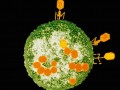
Bacteria-eating viruses (bacteriophages) have been approved as meat additives to reduce the risk of Listeria and Campylobacter found in processed meat and poultry products, but there’s a concern they could spread toxin genes between bacteria.

Exposure to meat packaging in the supermarket may lead to food poisoning in children placed in shopping carts.

The food-poisoning fecal bacteria found in 70% of U.S. retail poultry is destroyed by proper cooking, but contamination of the kitchen environment may place consumers at risk.

A neuropathic strain of the fecal bacteria Campylobacter, found in poultry, can trigger Guillain-Barré syndrome, a rapid and life-threatening paralysis.

Poultry workers exhibit an excess of a wide range of diseases, from thyroid conditions to schizophrenia, and autoimmune neurological disorders, such as myasthenia gravis. This may be due to exposure to viruses present in chickens and turkeys.

Avian leukosis/sarcoma virus has been found in 14% of retail egg samples.

The largest study to date on poultry workers found a significantly increased risk of dying from penile cancer, thought to be due to exposure to oncogenic (cancer-causing) chicken viruses, which raise consumer concerns as well.

The association between poultry and cancer may be explained by the presence in chickens’ and turkeys’ flesh of industrial carcinogens such as dioxins, oncogenic (cancer-causing) viruses, and/or the drugs that were fed to the birds.

