NutritionFacts.org

Is raw milk healthy?

What about Raw Milk? I know the general arguments against milk as ‘Toxin’ cites above, personally I am a vegan, but what is the actual research on Raw milk vs pasteurized milk. I work in the area of local food and farmers markets and I am exposed to vegetarians and omnivores that are big boosters for raw milk. With so much propaganda and misinformation being flung from both the sides of the raw vs. pasteurized milk its hard to make sense of it all. What does the research say? I find it hard to believe that raw milk is the super food a lot of people claim it is.

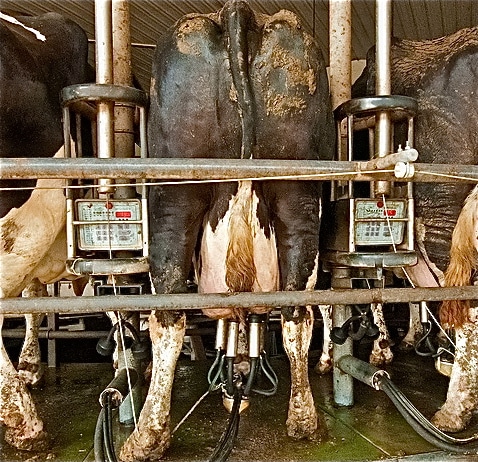
Image credit: USDAgov /Flickr

WKing / Originally posted below Hormones in Skim vs. Whole Milk

Answer:

There was a systematic review published in November that looked at some of the claims of raw milk advocates. The researchers basically concluded that the impact of pasteurization on the nutritive value of milk appears to be minimal.

The greater issue is that of infectious disease (the reason it’s illegal in most states). Advocates argue that consuming raw milk is a matter of personal choice, but not when they go on to infect others. For example, in a raw milk outbreak of E.coli O157:H7 that hospitalized a number of children in Connecticut, in one household a kid who consumed raw milk infected a sibling who didn’t, who then infected a third. For those who are interested there are a number of recent commentaries on the dangers (here and here for example). Before pasteurization and the virtual elimination of bovine tuberculosis, hundreds of thousands of Americans died as a result of TB-infected milk. Let’s not go back to that era.

Pasteurized or not, organic or not, there continue to be public health concerns about the hormones present in all milk (particularly skim). See, for example, my videos Dairy Hormonal Interference and The Acne-Promoting Effects of Milk.

Dr. Michael Greger

About Michael Greger M.D.

Michael Greger, M.D., is a physician, author, and internationally recognized professional speaker on a number of important public health issues. Dr. Greger has lectured at the Conference on World Affairs, the National Institutes of Health, and the International Bird Flu Summit, testified before Congress, appeared on The Dr. Oz Show and The Colbert Report, and was invited as an expert witness in defense of Oprah Winfrey at the infamous "meat defamation" trial. Currently Dr. Greger proudly serves as the Director of Public Health and Animal Agriculture at the Humane Society of the United States.

View all videos by Michael Greger M.D.

  • jess

    I have seen your videos on the many negative health impacts of cow’s milk. What is the effect of goat’s milk on the human system?

    • http://www.DonForresterMD.com/ Don Forrester MD

      Not alot of studies on goat milk not surprising since not as commonly consumed as cow’s milk. It’s composition is very similar to cow’s milk. There are many health organizations that recommend against feeding to infants for a number of reasons. Given all that I would imagine it has all the adverse effects of cheese made from cow’s milk.

  • Wes

    Thanks! That was my comment that I posted last spring (I think) Im so glad to see this!

  • http://HumanExcellence.com/ JD Mumma

    My research indicates that there is far more problems associated with homogenization that pasteurization.
    Just to be clear I do not recommend any type of bovid teat sucretions

  • moho212

    I’m curious to know how to fold in the claims made by those milking a cow on a homestead scale, where the cow receives optimal grass/forage nutrition and care in handling. Wondering if the disease risks lessen significantly enough to assess meticulously raised grass-fed raw milk differently. These are often the comeback arguments by those advocating raw milk, along with claims that there are benefits to the soil and farm ecosystem that grazing animals can offer.

  • What is the optimal diet for disease prevention?

  • Subscribe to our free newsletter and stay up to date with the latest discoveries in nutrition.
  • This field is for validation purposes and should be left unchanged.