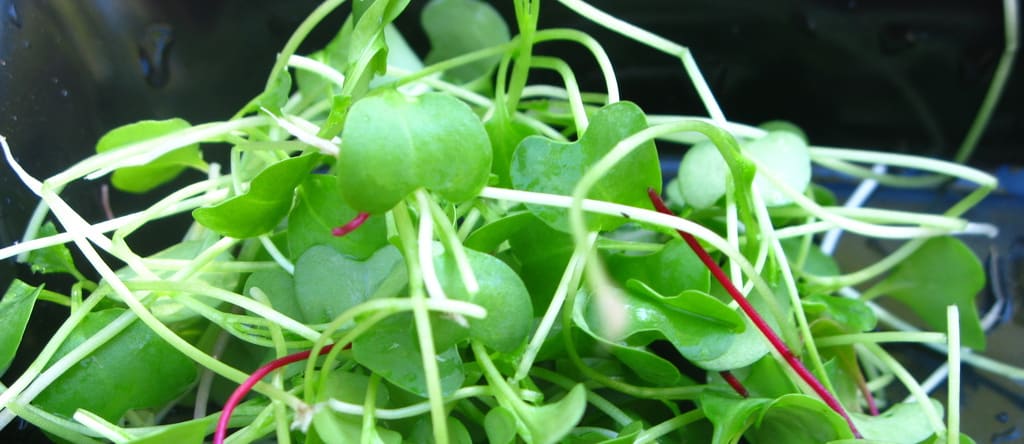
What about microgreens?
vetstud / Originally Posted in Antioxidants Sprouting Up
Answer:
USDA researchers recently published a study assessing the nutrition content of 25 commercially available microgreens, seedlings of vegetables and herbs that have gained popularity in upscale markets and restaurants. Just a few inches tall, they boast intense flavors and vivid colors, but what about their nutritional content? No one knew until this new study came out.
We’ve known that baby spinach, for example, have higher levels of phytonutrients than mature spinach leaves, but what about really baby spinach, just a week or two old?
Microgreens won hands down (leaves down?), possessing significantly higher nutrient densities than mature leaves. For example, red cabbage microgreens have a 6-fold higher vitamin C concentration than mature red cabbage, and 69 times the vitamin K.
Microgreens are definitively more nutrient dense, but are often eaten in small quantities. Even the healthiest garnish isn’t going to make much of a difference to one’s health. And microgreens may go for $30 a pound! But BYOM—birth your own! You can have rotating trays of salad you can snip off with scissors. It’s like gardening for the impatient—fully grown in just 7 to 14 days! If that’s too long, what about sprouting? See my video Antioxidants Sprouting Up.
Homemade sprouts are probably the most nutrition-per-unit-cost we can get for our money. See Biggest Nutrition Bang for Your Buck, where they beat out the previous champ, purple cabbage. Broccoli sprouts are probably the best—see for example The Best Detox and Sulforaphane From Broccoli to Breast. I would recommend against alfalfa sprouts (even when home sprouted) as fecal bacteria from manure can hide in the seed’s nooks and crannies and cause illness: Don’t Eat Raw Alfalfa Sprouts.
image credit: ilovemypit / Flickr