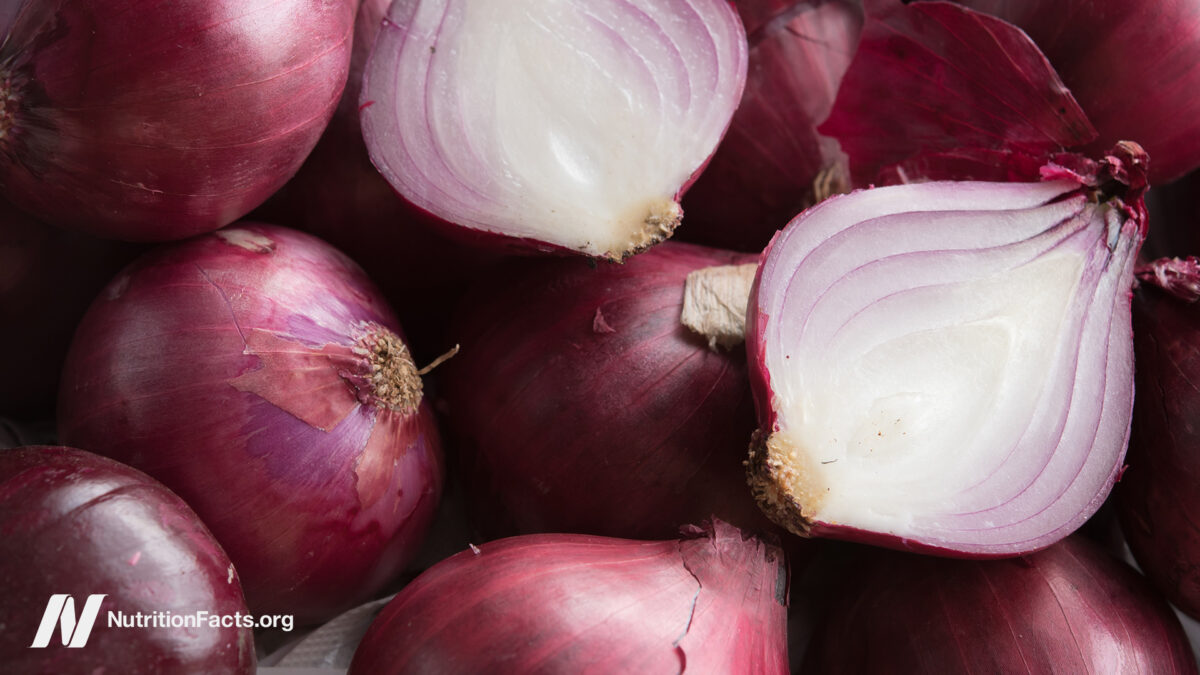
What did randomized, controlled human trials find about the ways we may—or may not—benefit from eating onions?
Onions are potentially a good source of antioxidants, which, interestingly, are concentrated in the outer layers just beneath the papery peel. White onions, for example, contain more than ten times the antioxidants in the outer layer compared to the inner core. Unfortunately, most people discard the most nutrient-rich outermost layers, “thus losing a valuable part of the antioxidant-rich material.” In general, yellow onions have more antioxidants than white onions. Red onions beat them both, based on three different antioxidant testing methods, as seen at 0:39 in my video Are Onions Beneficial for Testosterone, Osteoporosis, Allergies, and Cancer?
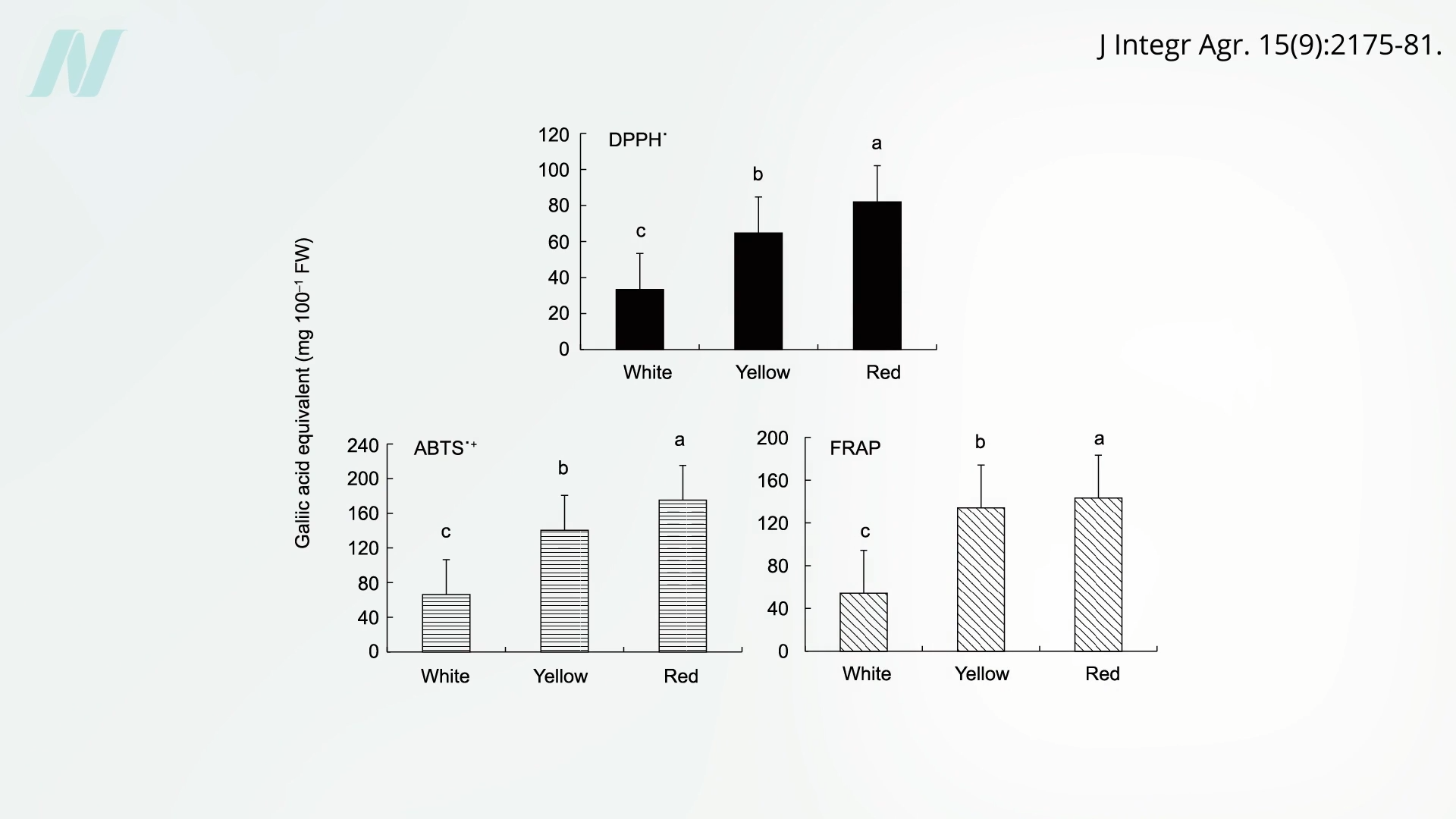
Though red onions are indeed slightly better, yellow and white onions are no slouches, containing considerable levels of antioxidant activity. We know they’re nutritious, but are there any particular clinical benefits to eating onions? There are all sorts of headlines in the medical literature touting miraculous benefits, but what are these claims based on?
For example, there’s a review purporting to have evidence that testosterone levels in males are enhanced by onion, but the researchers were referring to studies like one on the effects of onion juice after testicular torsion in rats. Who cares what happens after a rat’s testicle is rotated 720 degrees counterclockwise? (Except, of course, the rat.) You don’t know what happens in people until you put human testes to the test. Only then was it discovered that onion extract doesn’t appear to affect men’s testosterone.
What about bone health? Evidently, older white women who ate onions at least once a day had an overall bone density that was 5% greater than women who ate onions no more than once a month. Now, 5% might not sound like a lot, but that improvement in bone density could potentially mean decreasing their hip fracture risk by more than 20% if, indeed, it is cause and effect.
Daily administration of onion for four weeks did cause a big bump in bone density. This could lead to a safe, effective, and low-cost approach to osteoporosis in—you guessed it—rats. Another rodent study!
Great strides have been made in treating osteoporosis with drugs, but they have the potential for serious adverse side effects, so scientists have turned their attention to natural remedies. In one study, researchers randomized people to drink onion juice or placebo onion juice for 8 weeks. Improvement was noted for a marker of bone health; however, they didn’t actually follow participants long enough to compare osteoporosis rates.
Do shallots exhibit anti-allergy activity or offer any therapeutic effects for relieving allergic runny noses? Sixteen patients were randomized equally into an antihistamine group or a group that got antihistamines and capsules containing dried shallot powder. It looked like the shallot group did better after four weeks, but there was no statistically significant difference in total symptoms between the two groups. So, another #onionfail.
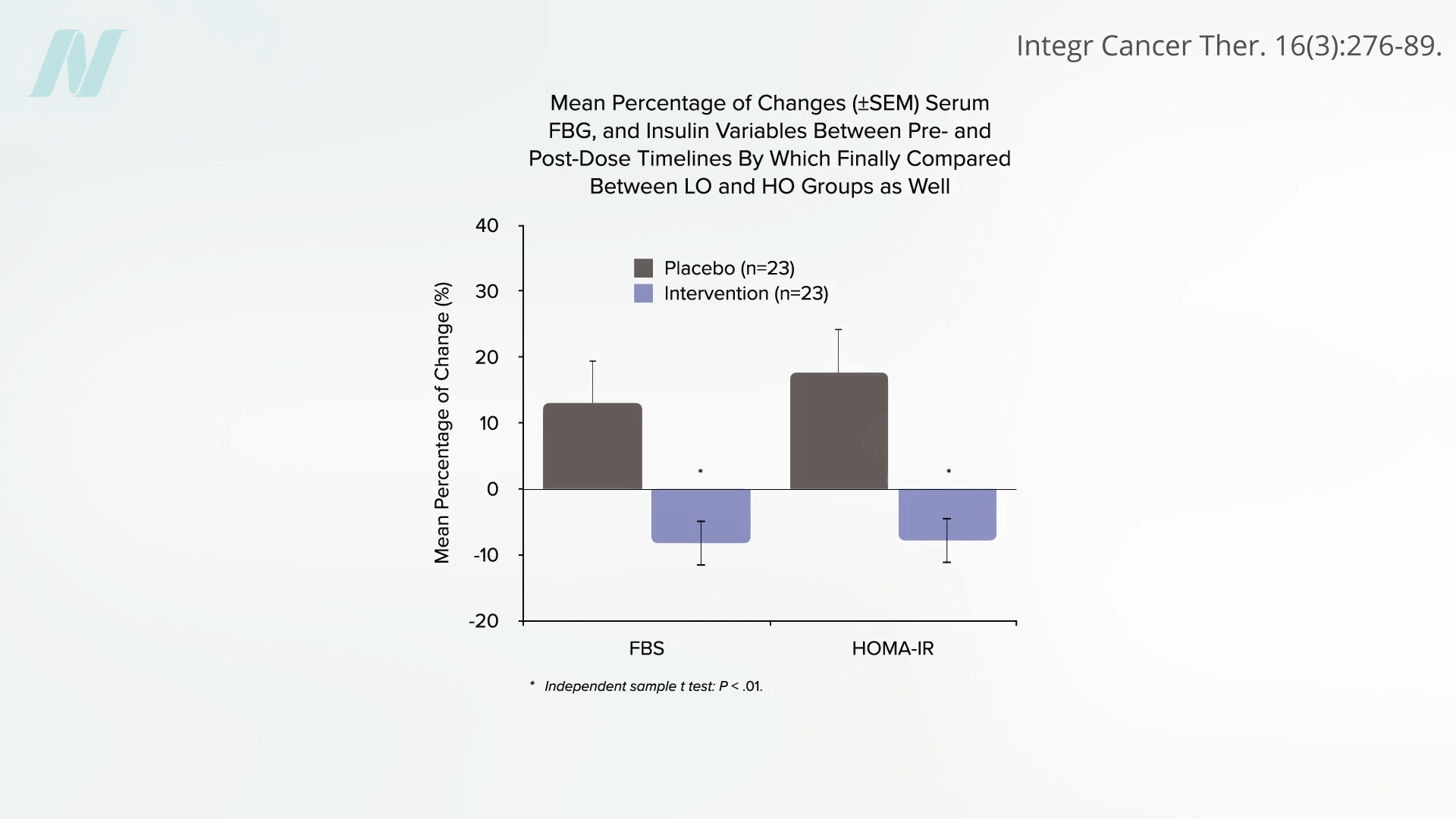
What about testing the effects of eating fresh yellow onion to try to decrease the toxic effects of a chemotherapy drug called doxorubicin in breast cancer patients? Unfortunately, no significant benefit was found in decreasing damage to the liver or heart. But eating fresh yellow onion was found to help reduce high blood sugar levels and insulin resistance in breast cancer patients during doxorubicin-based chemotherapy. The drug isn’t just toxic to the liver and heart—it may also contribute to insulin resistance.
So, researchers performed a randomized, triple-blind, controlled clinical trial, randomizing patients to eat a whole onion a day or a third of an onion a day for eight weeks. What happened? The higher-dose onion group experienced a significant decrease in blood sugars and insulin resistance compared to the lower-dose group. Levels rose in the lower-dose group but fell in the higher-dose group, as you can see below and at 4:28 in my video.
So, make onions your friend. What’s the worst that can happen—a little onion breath and body odor?
Doctor’s Note
What else can we do for breast cancer? See related posts below.